January in the bee year
The winter cluster sits still, metabolism is low — and yet, around the solstice, brood often starts cautiously. Leaving the bees alone now helps decide the start in March.
- Colony strength
- c. 8,000
- Brood
- starting
- Forage
- Hazel pollen
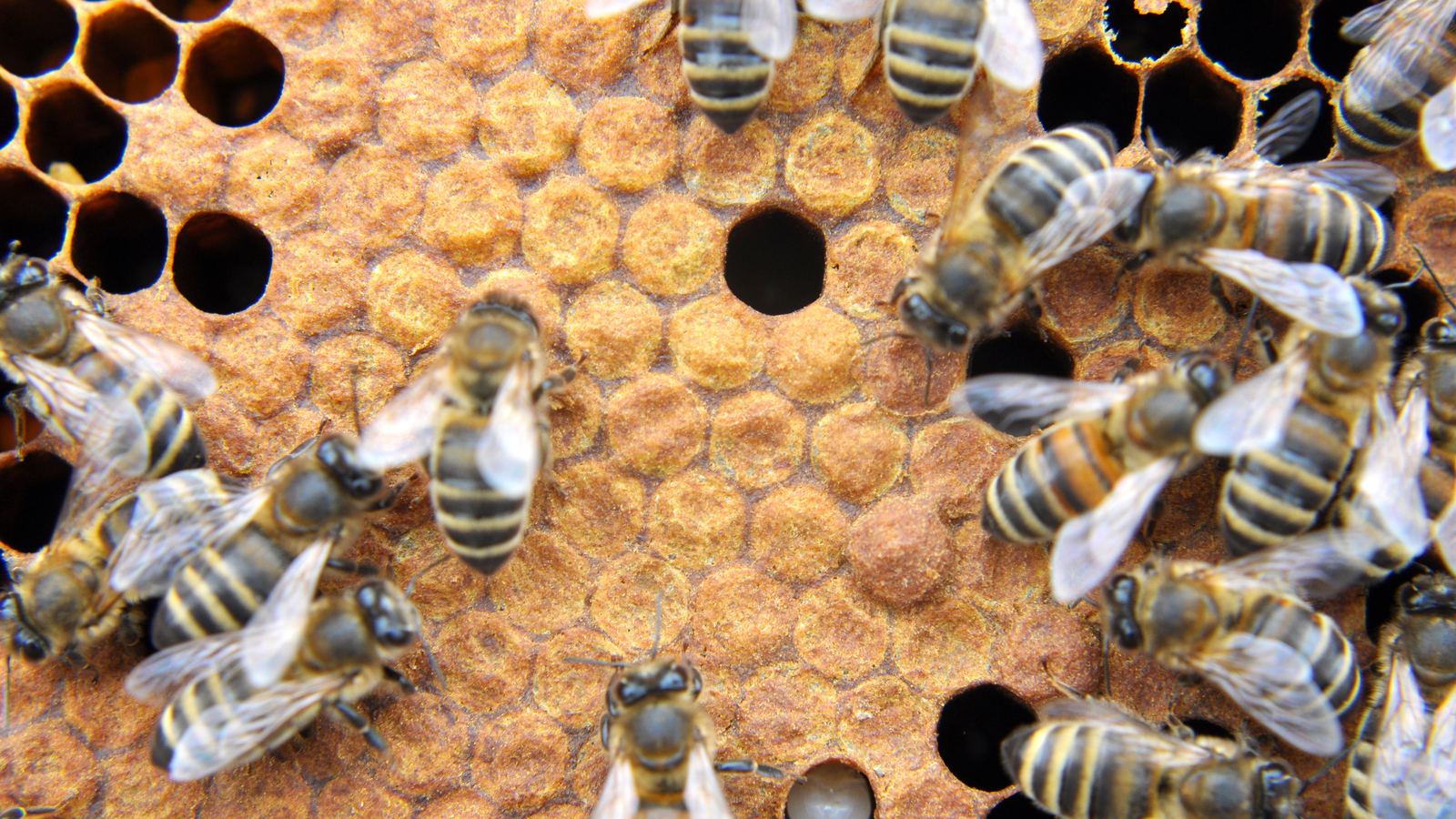
In January a colony looks dead from the outside. Dead bees lie at the entrance, nothing moves on cold days, and lifting the hive tells you mainly about weight. Inside sits the winter cluster: ten thousand bees or fewer, packed together, the core near 25 °C, the surface just above the air outside.
This is not sleep. The cluster creeps slowly over the ring of stores, burns honey and keeps the queen warm. Around the winter solstice many colonies lay the first eggs — not because the beekeeper wants it, but because day length trips the brood instinct. Every egg costs feed and heat. So January has one main job: do not disturb.
In January the work is leaving the bees alone.
In the colony
Winter bees — the long-lived workers raised in late summer — carry the colony through to March. Their fat body is larger, their metabolism slower than a summer bee's. In the cluster they take turns: those that chill on the outside work their way in.
January brood is risk and chance at once. A small nest keeps the queen laying and shortens the spring start. It also burns stores and forces the cluster to hold a fixed temperature. In lasting frost, with empty comb beside the nest, a colony can starve even though honey still stands in the box — the cluster will no longer break to reach it.
Beekeeping work
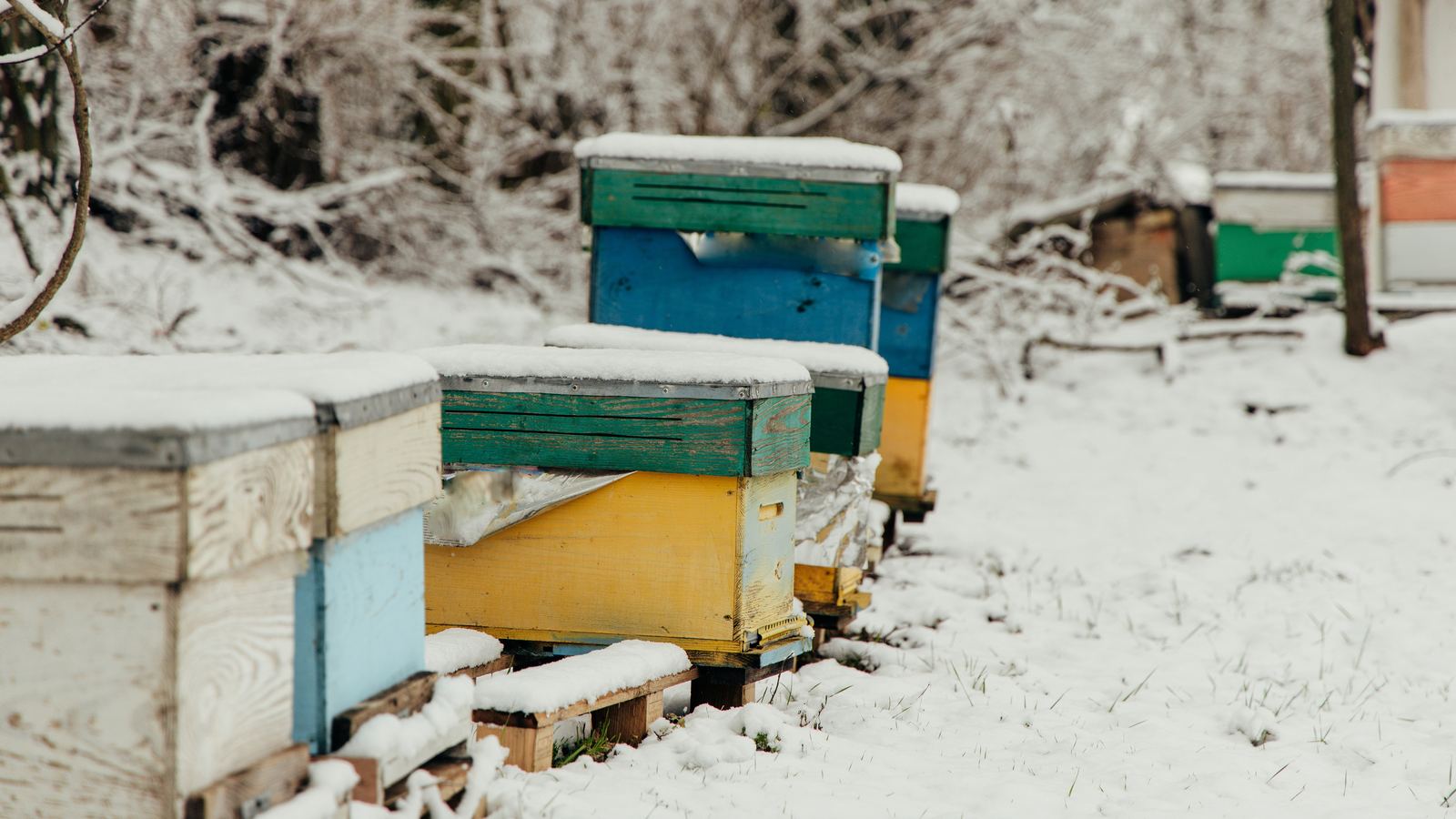
Checks belong in front of the hive, not inside it. Keep the entrance clear, check woodpecker and mouse protection, secure the roof against gales. Weight tells you more than any opening: hefting the hive from behind shows whether a real ring of stores remains. Mark light colonies and feed them on the next mild spell — do not tear every hive apart on principle.
If the midwinter mite treatment was missed in December and the colony is broodless, oxalic acid can still be trickled on a cold, dry day. A brood nest wrecks the point of a winter treatment. Otherwise: render wax, prepare frames, plan the year on paper. The bees do not need the beekeeper inside the hive in January.
Forage and pollen
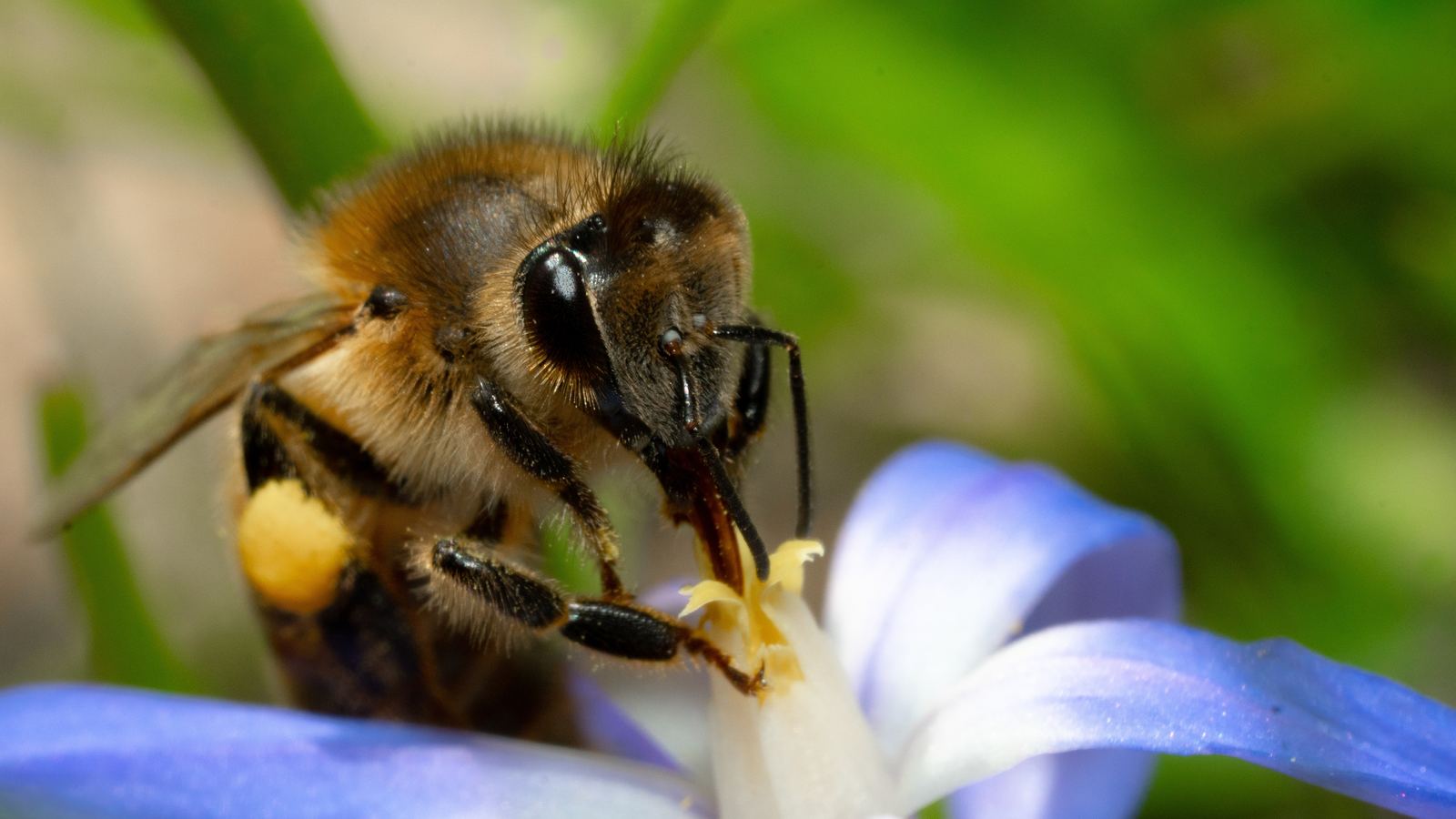
Hazel (Corylus avellana) often sheds pollen in January once the temperature rises above about 10 °C. That pollen is the first protein pulse of the year — visible as grey-yellow loads on the few foragers that fly in sun. Winter heath and winter aconite add a little in gardens.
Nectar does not matter. What counts is pollen plus the honey already there. Anyone who fed scantily in autumn finds out now: brood without stores does not go well.
At the apiary
- Heft the hive and mark light colonies
- Keep the entrance clear of dead bees and ice
- Check mouse guards and woodpecker protection
- Stay out of the hive — no inspection
- Catch up the winter mite treatment only if the colony is broodless
Forage this month
Hazel · Winter heath · Winter aconite