February in the bee year
Cleansing flights, the first pollen, a growing brood nest. February decides whether winter stores will last until fruit blossom.
- Colony strength
- c. 10,000
- Brood
- growing
- Forage
- Sallow, crocus
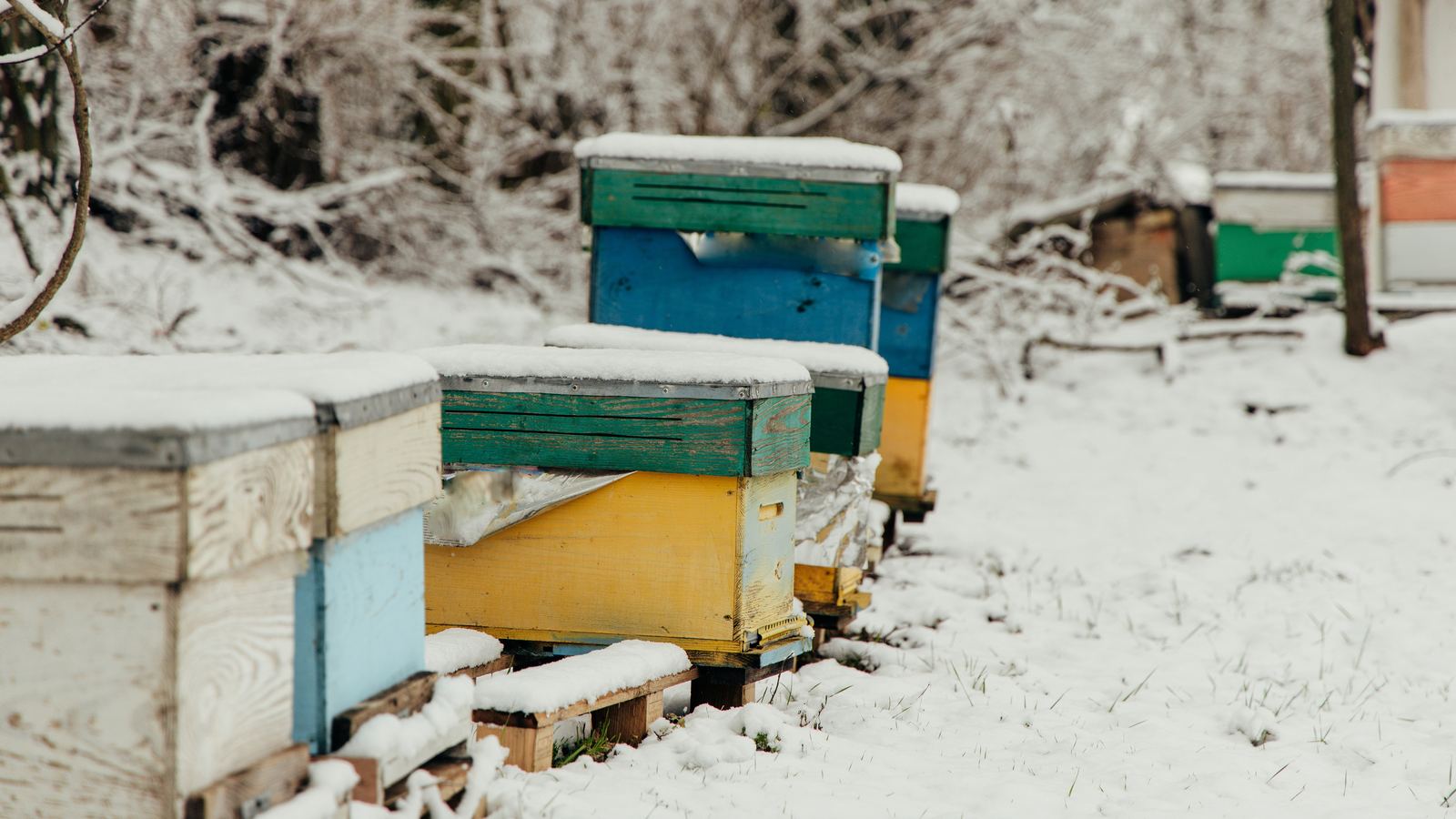
February is the first month of movement. Once the air reaches 10 to 12 °C and the sun warms the hive front, the bees come out on a cleansing flight. Faecal sacs held through the winter are voided — often in a rush that speckles the snow in front of the entrance.
Inside, the brood nest grows. The queen lays on a hand's breadth of comb, then two. Every sealed cell needs heat, and heat needs honey. Colonies fed tightly in autumn reach their limit here. Anyone who only watches now loses in March the colony that was still alive in January.
Pollen at the entrance is the first diagnosis of the year.
In the colony
The winter cluster loosens on sunny days. Young bees from January brood emerge and take over nursing, while the old winter bees keep heating. The balance tips slowly: fewer reserves, more active nurses.
Dead bees increase — that is normal so long as they are individuals, not handfuls. Faecal spotting at the entrance and on the combs points to nosema or a damp, restless winter. The colony then needs air and quiet, not an experimental inspection at 6 °C.
Beekeeping work
Keep hefting. A production colony should still feel heavy in February; if unsure, lift on several days and compare. Emergency feed is candy on the cover — not liquid feed in the cold.
Floors can be drawn and cleared of dead bees on a mild day. That is hygiene, not an inspection. The first real look waits for a still day above about 15 °C, often not until March. Anyone who splits the boxes in February chills the brood nest.
Forage and pollen
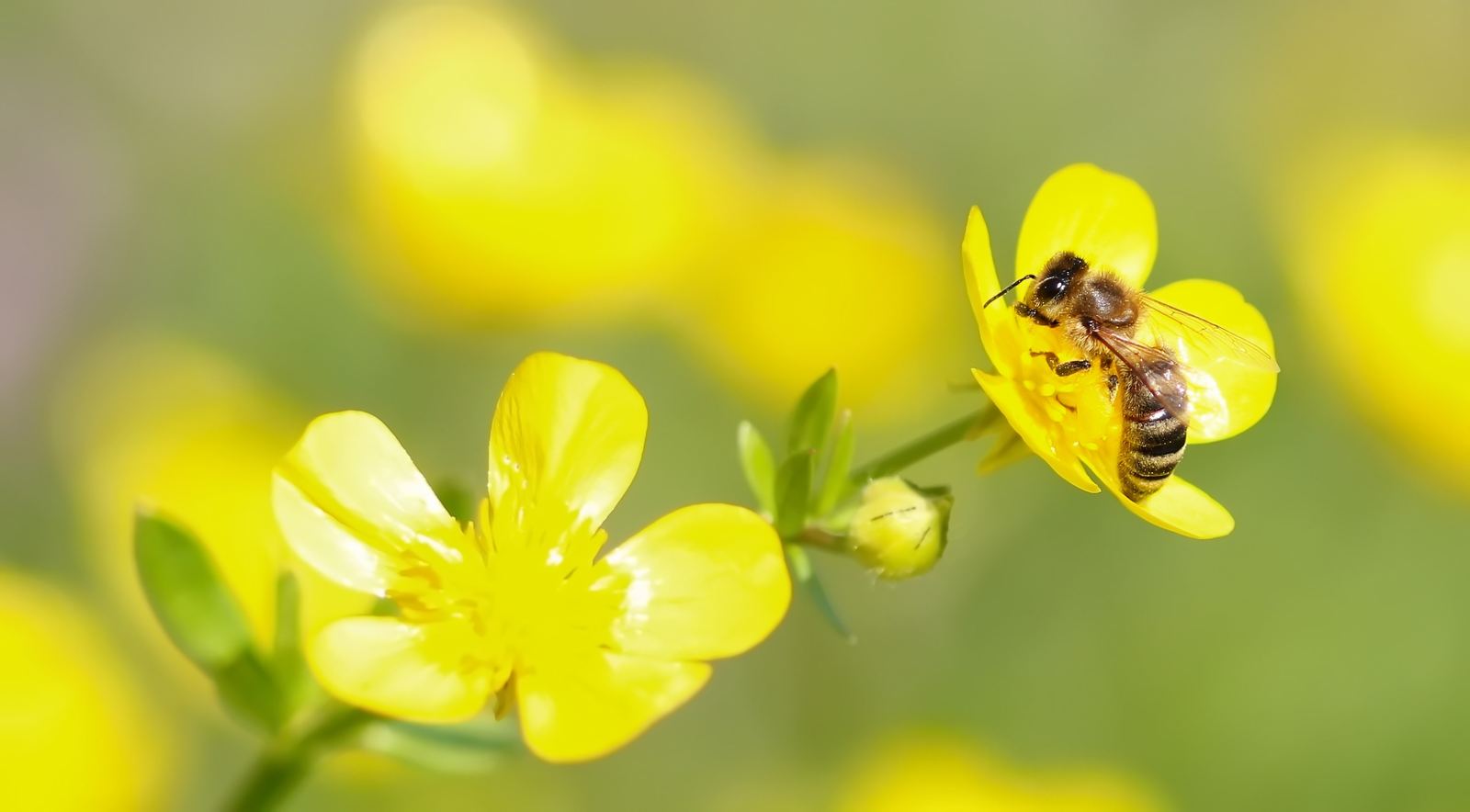
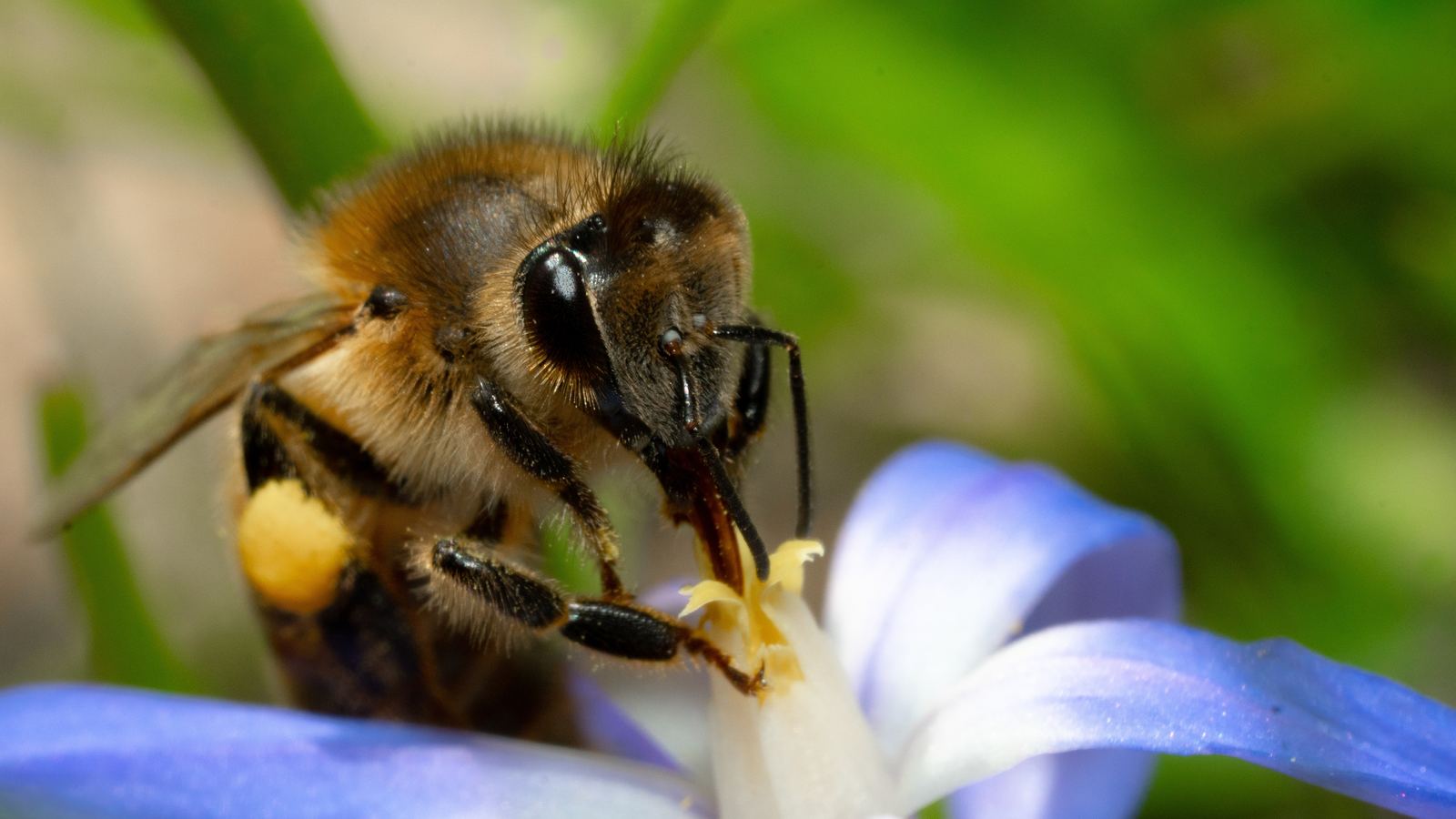
Sallow and cornelian cherry are the important pollen sources, plus crocus, winter aconite and snowdrops in town. Grey, yellow and orange pollen loads at the entrance are the best sign that the colony is in brood.
An apiary without willow in range suffers protein shortage in February and March. Anyone who can plant should plant sallow — it does more for bees than any ornamental cherry that only arrives in April.
At the apiary
- Heft for stores; give candy if needed
- Clear dead bees from the floor without chilling brood
- Watch the entrance: pollen loads, spotting, robbing
- Water at the apiary only on flying days, not inside the hive
- No swarm or nucleus plans yet — too early
Forage this month
Sallow · Cornelian cherry · Crocus · Winter aconite