May in the bee year
Swarm season. The colony is ready to divide, queen cells stand, rape and black locust fill the boxes. Weekly checks are now appointments, not a hobby.
- Colony strength
- c. 40,000
- Brood
- peak
- Forage
- Rape, locust
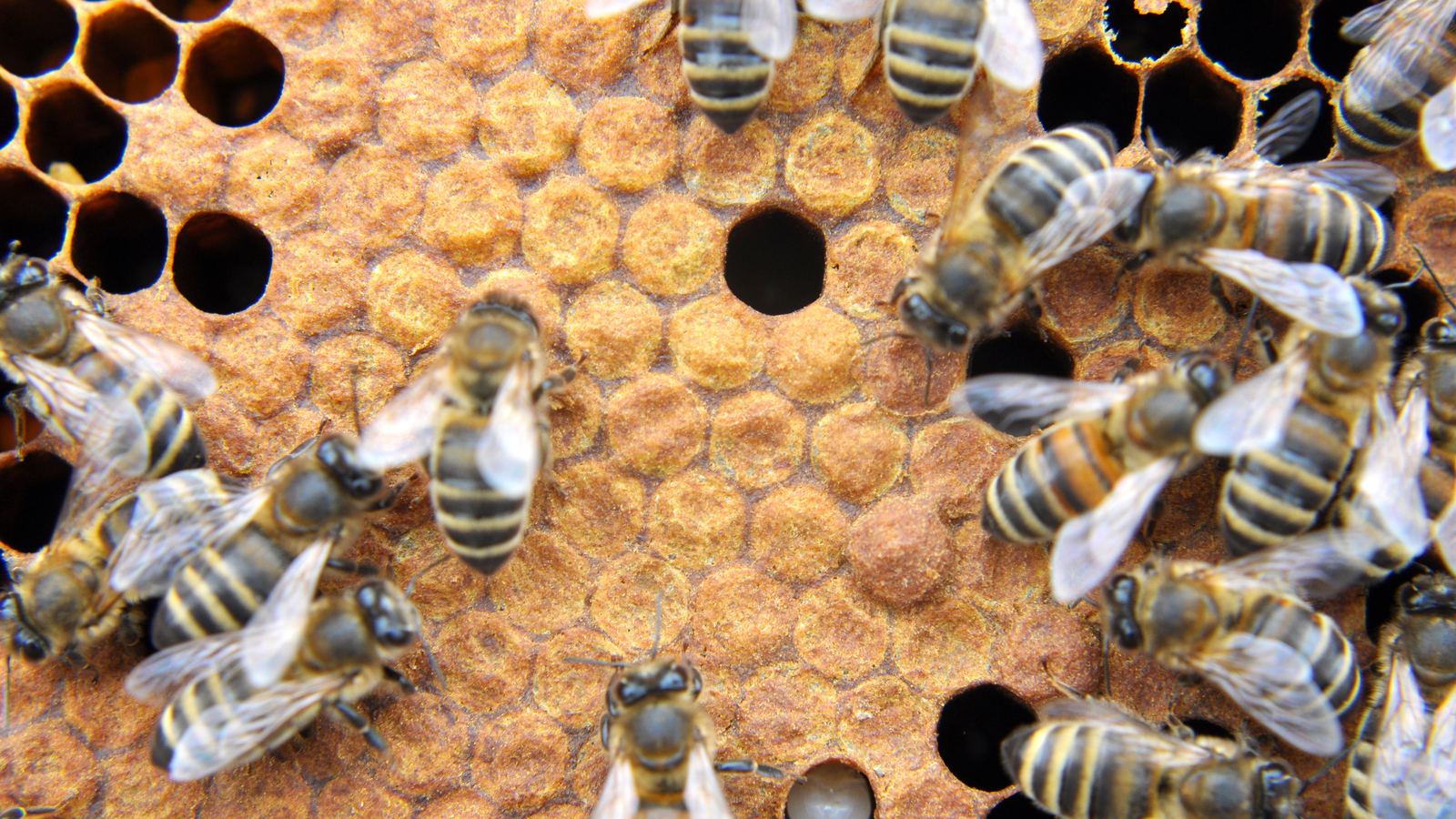
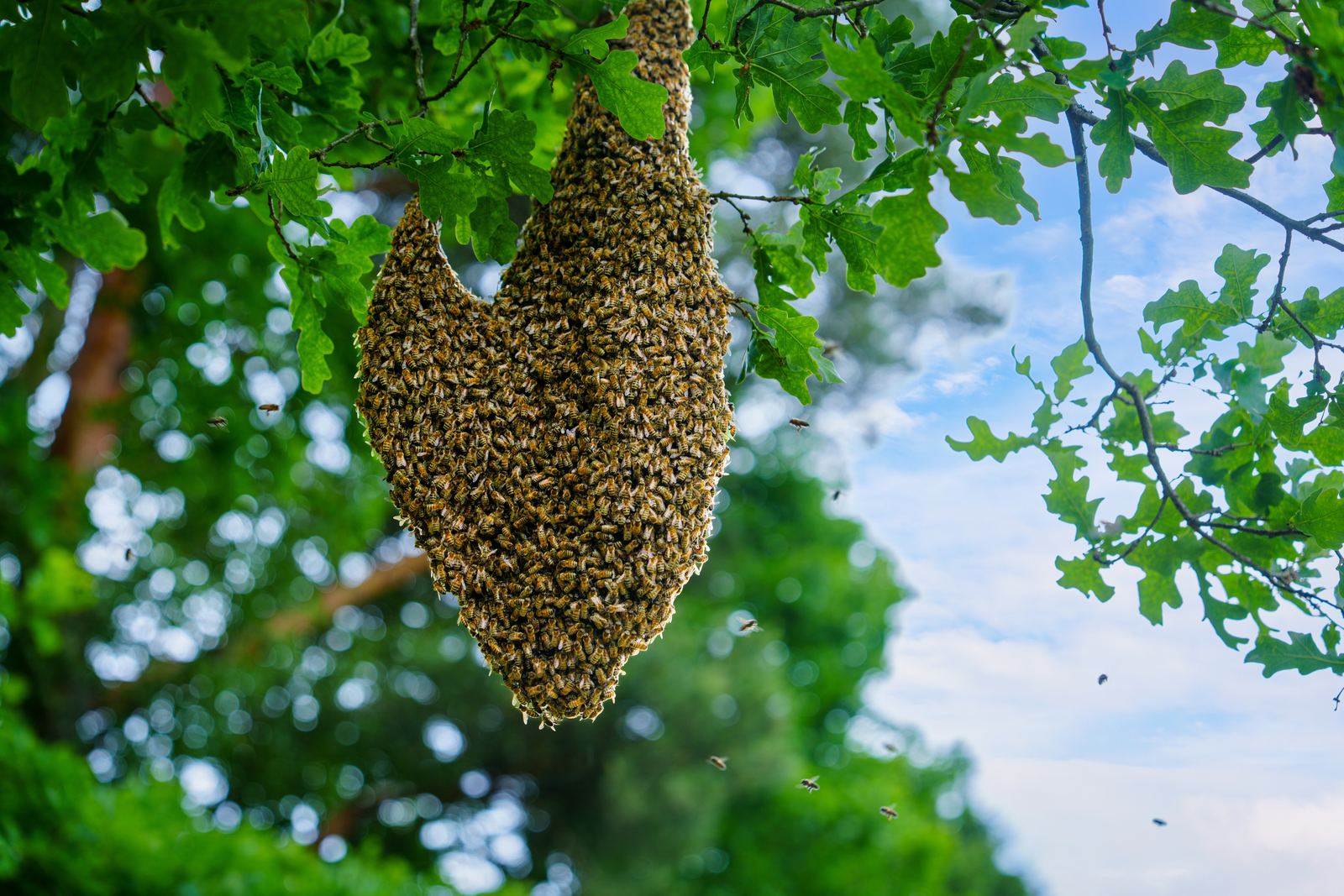
In May the colony reaches the threshold of reproduction. Forty to fifty thousand bees, a brood nest over two boxes, drones on the wing: biologically this is the moment a colony wants to split. The old queen leaves with the prime swarm; the young one stays.
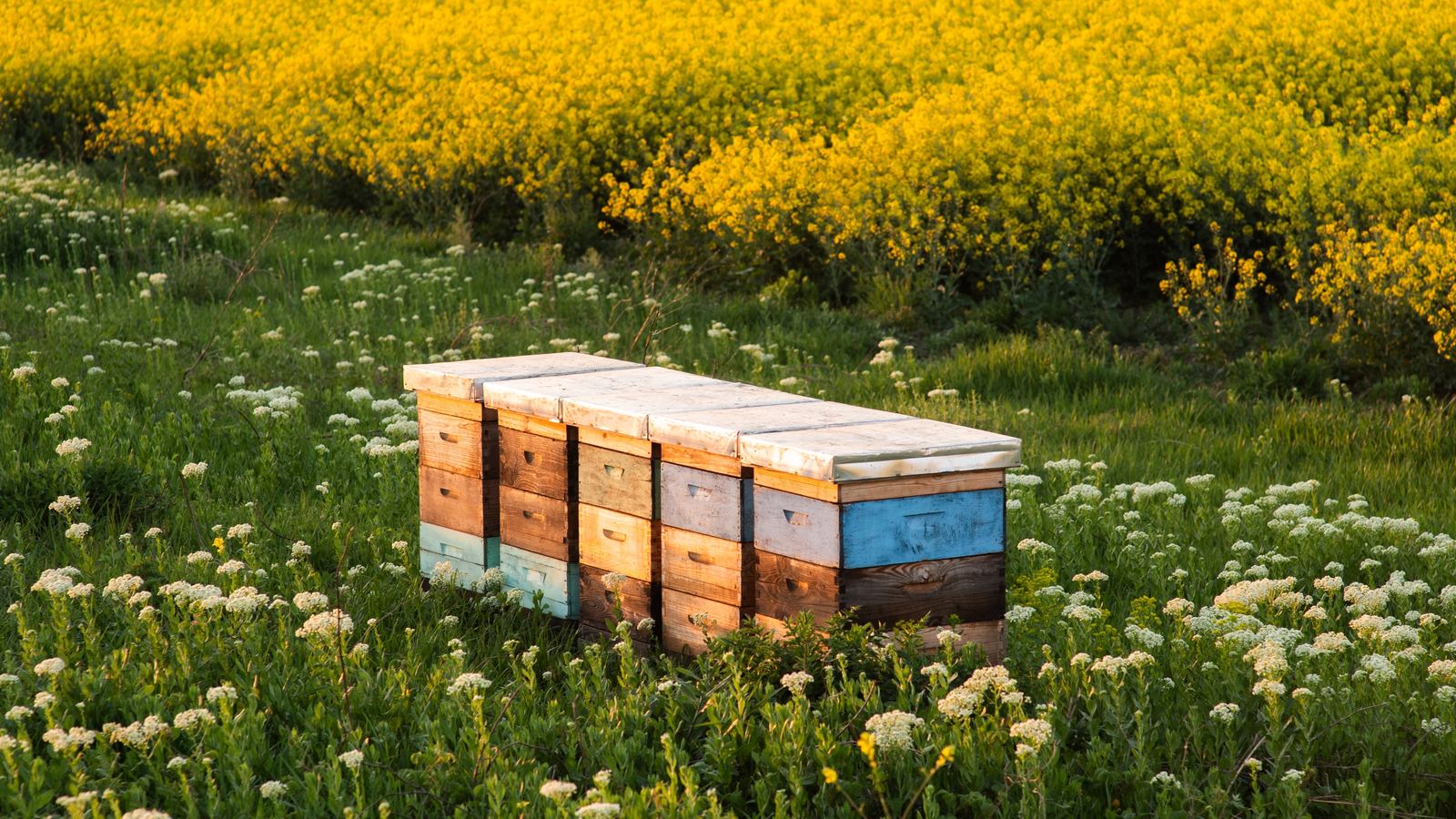
For beekeeping, May is the busiest month. Anyone who goes seven days without looking for queen cells often finds only an empty hive and a cluster on the neighbour's land. At the same time the flow is strong — rape, black locust, raspberry, maple. Harvest and swarm prevention run in parallel.
A swarm check is a diary entry, not a feeling.
In the colony
Play cups on the comb edge are the warning. Eggs in queen cells mean: the decision is made. After sealing, about eight days remain until the new queen emerges; the prime swarm usually leaves just before that, or on the first fine day.
The parent colony follows if afterswarms go — several young queens, smaller clusters. A colony that swarms twice is often lost as a honey colony for the season and valuable as a young colony if you catch it.
Beekeeping work
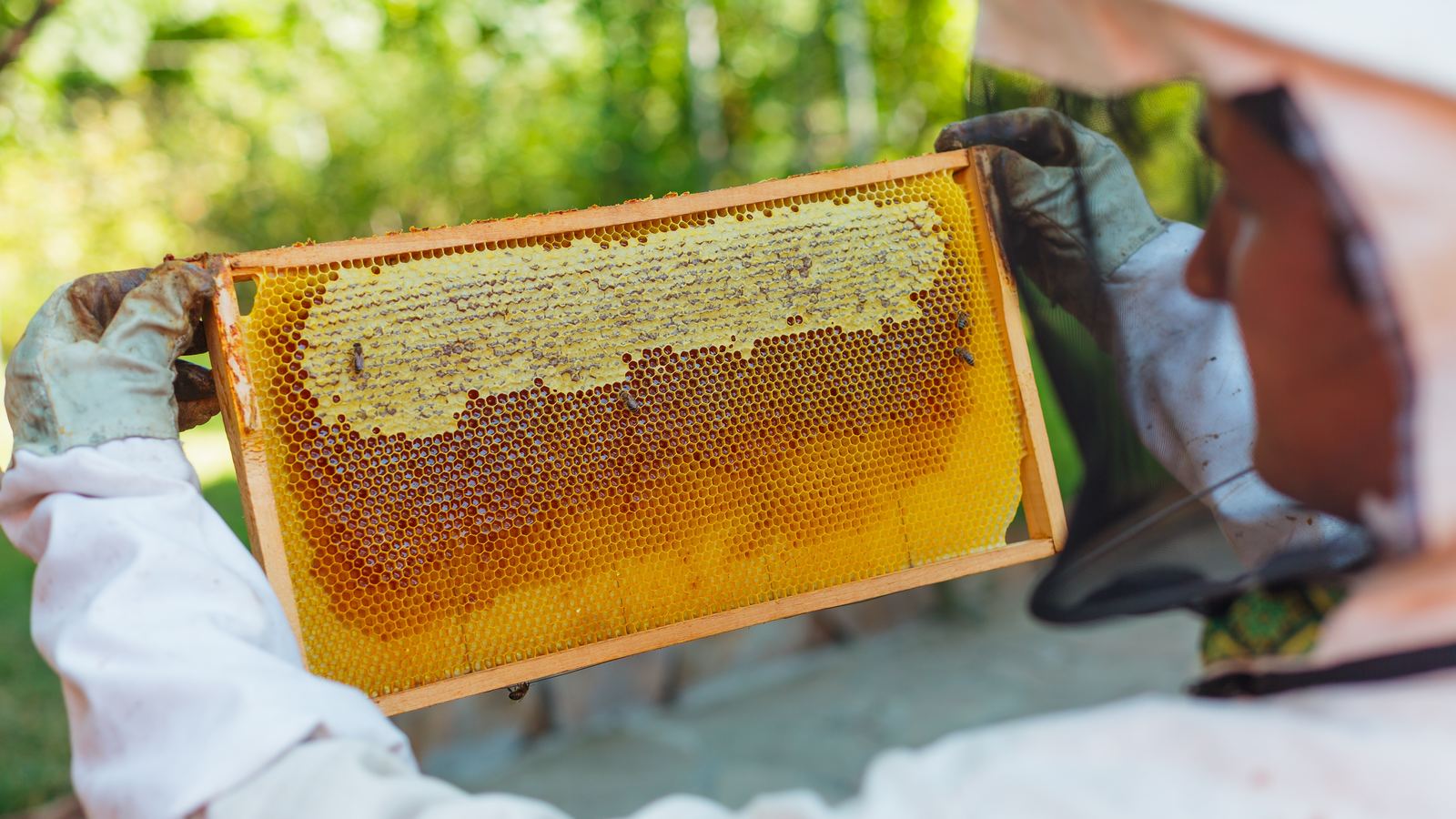
Weekly swarm checks: draw combs, look for queen cells, especially on the bottom edges. Breaking cells alone does not last — the colony replaces them. Anyone who wants to prevent swarms must relieve: supers, brood removal, nuclei, a shook swarm or a walk-away split.
Make nuclei now, not in August. Three or four brood combs with bees, stores, a fresh queen or a ripe cell. Move the nucleus kilometres away, or work with a shook swarm, or the foragers go home. Young colonies are next year's crop.
Forage and pollen
Rape can be the strongest flow of the year in arable country. Black locust follows in warm sites, often weather-sensitive: one cold rain and the bloom is over. Horse chestnut, raspberry and early meadow flowers fill the gaps.
Anyone who wants rape and locust separate needs two extraction dates. Mix them and you get an early-season honey that sets fast.
At the apiary
- Check weekly for queen cells
- Make nuclei or a shook swarm; relieve strong colonies
- Expand the super before nectar blocks the brood nest
- Cut out drone frames before the drones emerge
- Keep a swarm bag and a site for young colonies ready
Forage this month
Rape · Black locust · Horse chestnut · Raspberry · Maple