October in the bee year
Last flights in sunshine, brood is ending, ivy fades. The apiary goes quiet — and should stay that way.
- Colony strength
- c. 16,000
- Brood
- fading
- Forage
- Last ivy
October clears the flight. On sunny middays foragers still come, often with ivy pollen; on clear nights the colony already sits in cluster form. The brood area shrinks to a few combs or ends. The broodless window for the winter treatment draws nearer, but is not guaranteed.
Wind, wet and woodpeckers become more relevant than forage. Secure hives, firm the stands, weight the roofs. Anyone still rearranging, hunting queen cells or swapping boxes now pays in unrest and chilling.
What still flies in October no longer builds the winter.
In the colony
The winter cluster forms as temperatures fall, around the last brood or around the queen on empty cells with a ring of stores. Honey can still be moved on warm days — after that, what does not sit in the cluster stays where it is.
Late brood is not bad in itself, but it keeps varroa in play. Anyone still seeing large brood areas in October should take the mite situation seriously and not put the winter treatment off on a hunch.
Beekeeping work
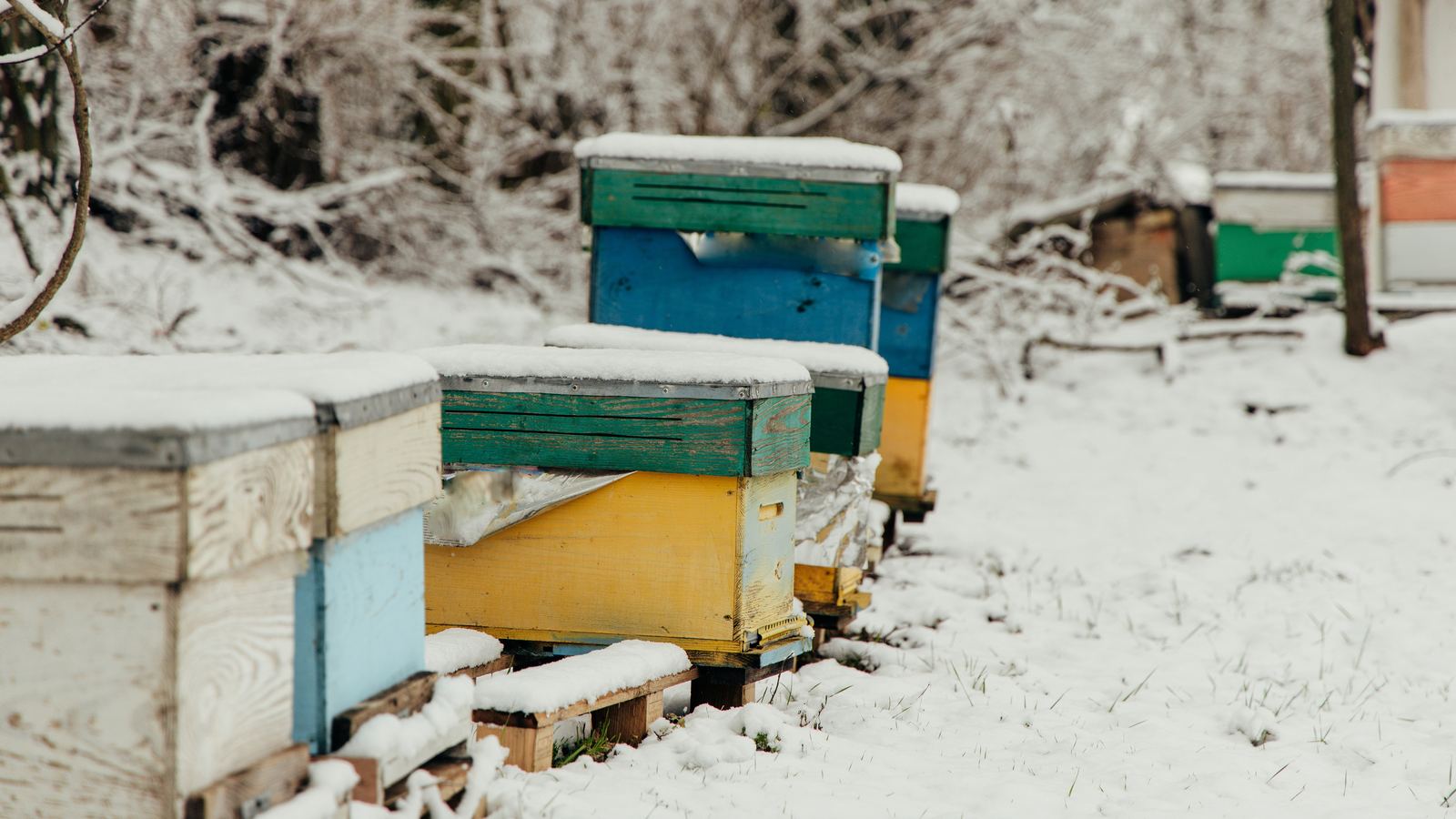
Quiet at the apiary. Entrance blocks against shrews, which fit through coarse mesh. Wind protection, no covers that drip condensation onto the cluster — heat loss from wet is a classic winter loss.
Kit: embed foundation, repair hives, melt old wax. That is beekeeping without bee contact and belongs in this month, not in May.
Forage and pollen
Ivy, as long as it blooms and the bees fly. After that: no forage. Anyone planning to extract in October is extracting winter stores.
At the apiary
- Secure hives against wind and woodpeckers
- Check shrew and mouse protection
- No inspection, no box-swapping
- Do wax and kit in the workshop, not at the apiary
- Note brood status — for the timing of the winter treatment
Forage this month
Ivy