November in the bee year
The cluster closes, metabolism drops, there is no forage. Prepare the broodless winter treatment — and keep the apiary genuinely quiet.
- Colony strength
- c. 12,000
- Brood
- usually none
- Forage
- none
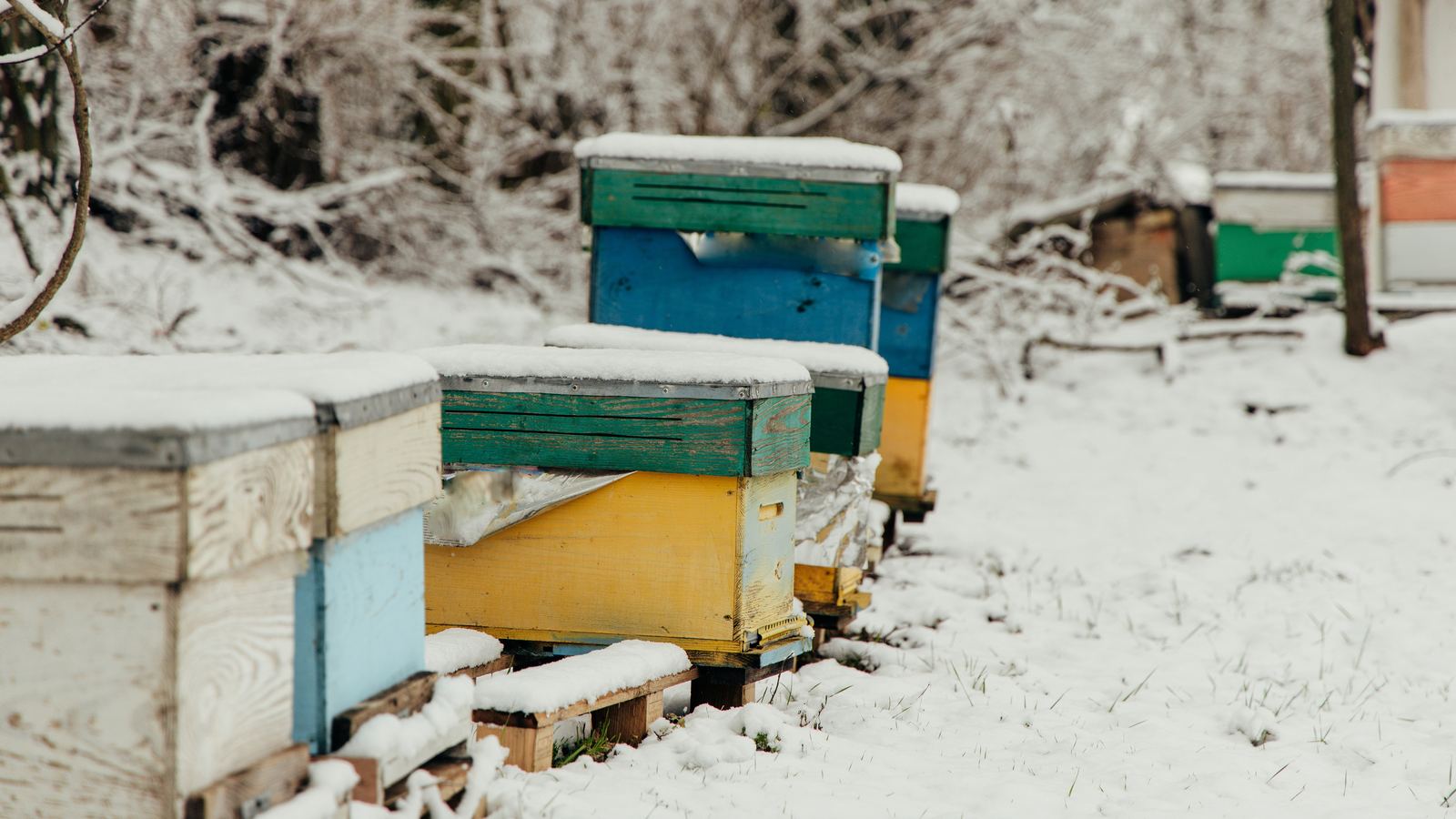
In November the colony becomes a cluster. Below about 10 °C the bees sit tight, the core stays warm, the surface cold. Flights happen only on exceptional days. Anyone who visits the apiary should have a reason that is not curiosity.
Many colonies are now broodless or nearly so. That is the window the winter treatment aims at: oxalic acid hits mites on the bees, not under cappings. Anyone who trickles too early, while brood is still present, treats incompletely.
November belongs to the cluster, not to the diary.
In the colony
Metabolism drops, so does feed use — so long as no one breaks the cluster. Disturbance by vibration, woodpecker, mouse or beekeeper raises consumption and can split the cluster. Bees do not always find their way back together.
Condensation on cold walls is normal; wet comb over the cluster is not. A cover that breathes, not an airtight plastic lake that sends drip water down.
Beekeeping work
Prepare the winter treatment: product, dose, temperature (do not trickle in hard frost), protective kit. Check the broodless state without a full inspection — a look from above, one comb, a mild day.
Otherwise: inventory, queen records, ordering foundation, planning which apiary will need supers in April. November is the administration of next year.
Forage and pollen
No forage. Hazel stands in bud, but does not bloom until a mild end of winter. What the colony eats now was stored in August and September.
At the apiary
- Keep the apiary quiet
- Check broodlessness for the winter treatment
- Prepare the treatment; do not rush it
- Check roofs and moisture
- No more liquid feeding