The winter colony
Cluster, winter bees, ring of stores, broodless mite treatment. Overwintering is less a recipe than a consequence of the right months before.
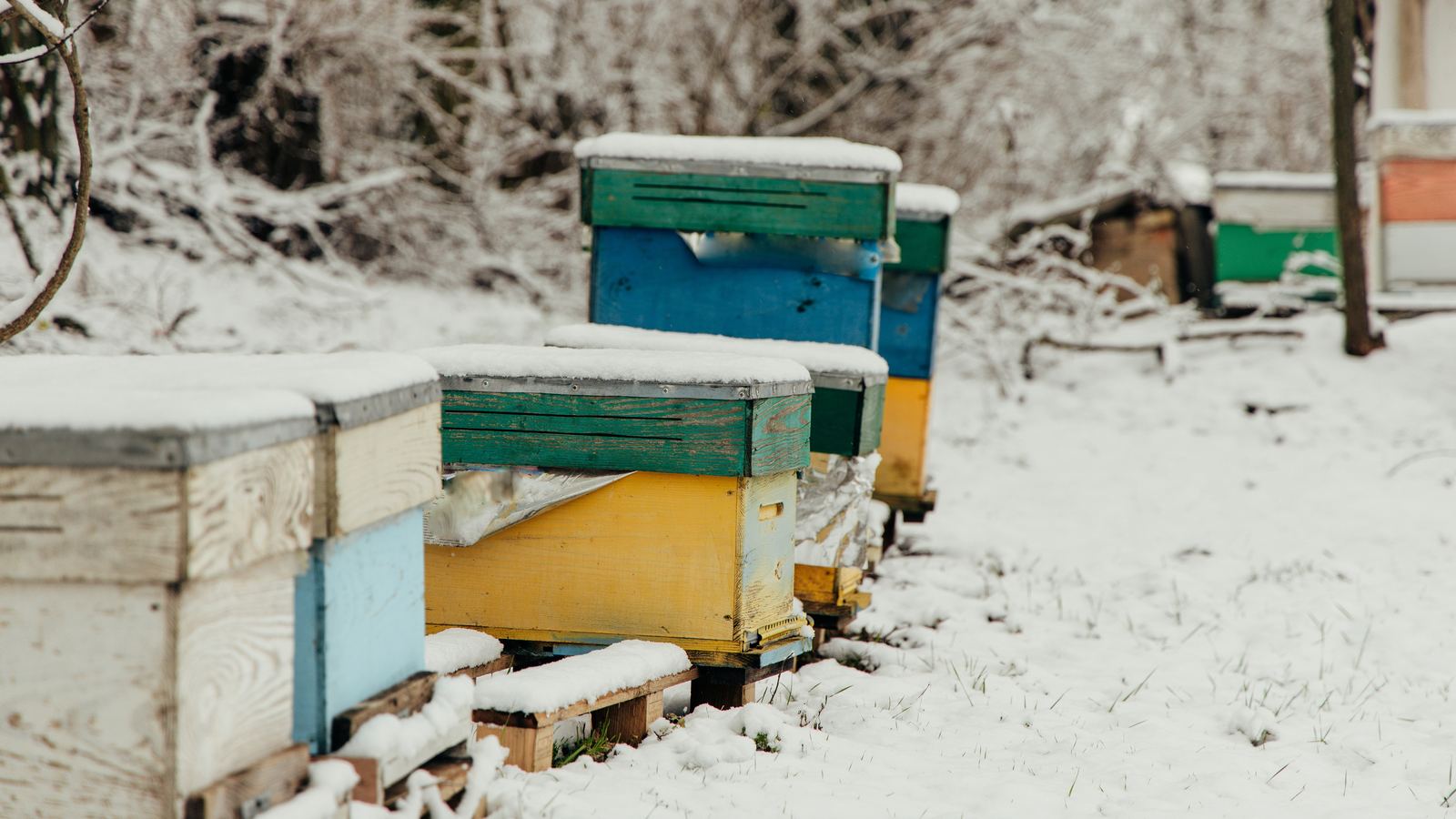
A winter colony is not a summer colony on pause. It is another form of organisation: fewer animals, different physiology, a cluster instead of a brood circle, honey as heating fuel. Anyone who applies summer standards — weekly inspections, open boxes, liquid feed — destroys exactly what is meant to survive the cold.
Good overwintering begins in July and August, not in November. Mite-poor winter bees, enough feed in the later nest, a tight hive, a dry box, quiet.
Winter rest is a performance of the colony. The beekeeper can only fail to squander it.
The cluster
Below about 10 °C the bees form a cluster. Inside around 25 °C without brood, towards 35 °C with brood; outside near the air temperature. The cluster migrates over the ring of stores. Honey that stands beside the cluster in winter is often out of reach.
That is why the nest is reduced in late summer and feeding is done so that stores lie where the colony will sit. Three half-empty boxes are a trap. A dense colony on a fitting number of combs is the rule.
Feed and moisture
Guide values, depending on hive and site, lie around 15 to 20 kilograms of winter stores. Too little is fatal. Too much blocks brood space in March. Feeding belongs in August and early September, not in frosty November.
Damp kills faster than cold. Condensation dripping onto the cluster chills and sickens. Covers that breathe, floors that do not soak, sites without standing wet.
Varroa in winter
The broodless phase is the moment mites are not sitting in cells. Oxalic acid (trickled or sublimated, authorised, dosed) aims at that. Anyone who misses the window carries the summer infestation into the next brood nest.
The winter treatment does not replace the summer treatment. It closes it. Colonies with crumpled wings in December are the record of a summer that came too late.