How a colony decides to move house
Scouts dance for competing nest sites until a quorum tips. A decision with no centre.
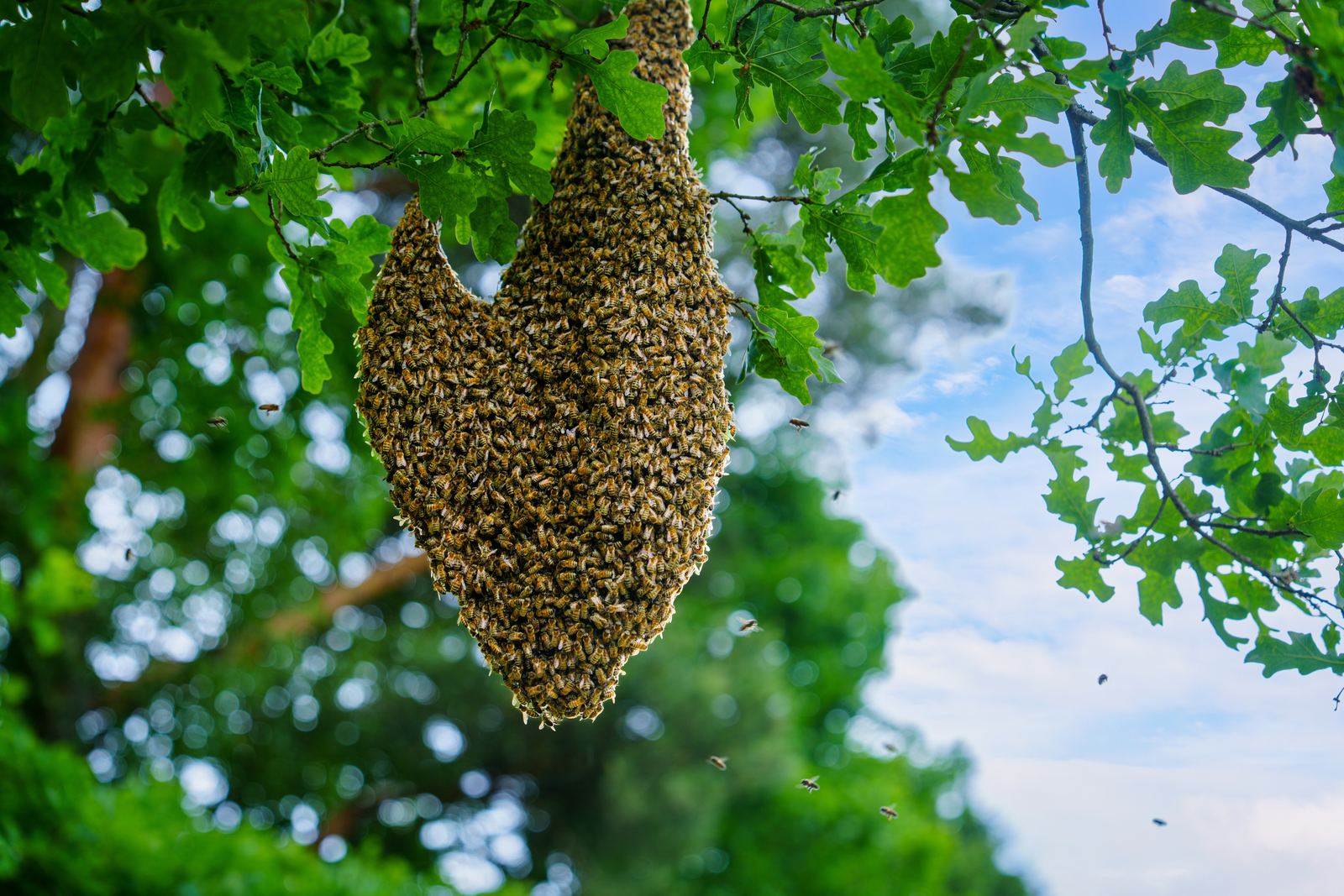
When a colony swarms, the old queen leaves with much of the workforce and settles nearby as a cluster. The swarm hangs there, often for one to three days, with a single task: find a cavity that is large enough, dry and defensible.
A few hundred experienced foragers fly out as scouts. Those that find something return and dance on the surface of the cluster — the same waggle dance used for food, except that what is advertised here is a place, not nectar.
What matters is how persistently a scout advertises her find. A good cavity is danced for at length, a mediocre one only briefly. Other scouts fly out, inspect it themselves and, if convinced, dance along. Good sites amplify; weak ones lose their advocates.
Waggle dance: duration and distance
The longer the waggle phase, the further the target. Guide values for Apis mellifera carnica — the conversion differs between subspecies.No single bee knows all the sites. The colony does.
The decision is not made on the cluster but at the site: once enough scouts are present there at the same time — a quorum of roughly twenty to thirty — they switch to a piping signal that readies the swarm for flight. Shortly afterwards the cluster lifts off.
For beekeeping this means swarm control is calendar work. Checking weekly for queen cells in May and June decides whether the colony ever has to make the decision at all.