July in the bee year
Forage collapses in many sites, the queen lays less, varroa rises. After the last harvest, treatment begins — in time for the winter bees.
- Colony strength
- c. 45,000
- Brood
- declining
- Forage
- Gap, late flow
July is the month the year turns. After lime blossom the nectar supply in arable and urban sites often drops steeply. The colony still looks strong, but finds less. Robbing increases, the brood nest shrinks, the mites do not.
Anyone who takes the last crop now and puts varroa treatment off until August is treating winter bees that are already damaged. The line from the health section applies here in the concrete: you do not treat the mites. You treat the winter bees.
After lime blossom the bee year of next spring begins.
In the colony
The queen throttles laying. That is seasonal, not a sign of queen failure — so long as open brood is still there. The population stays high because summer bees are still alive; replacement falls. In the forage gap the bees eat their own honey if the beekeeper has extracted everything.
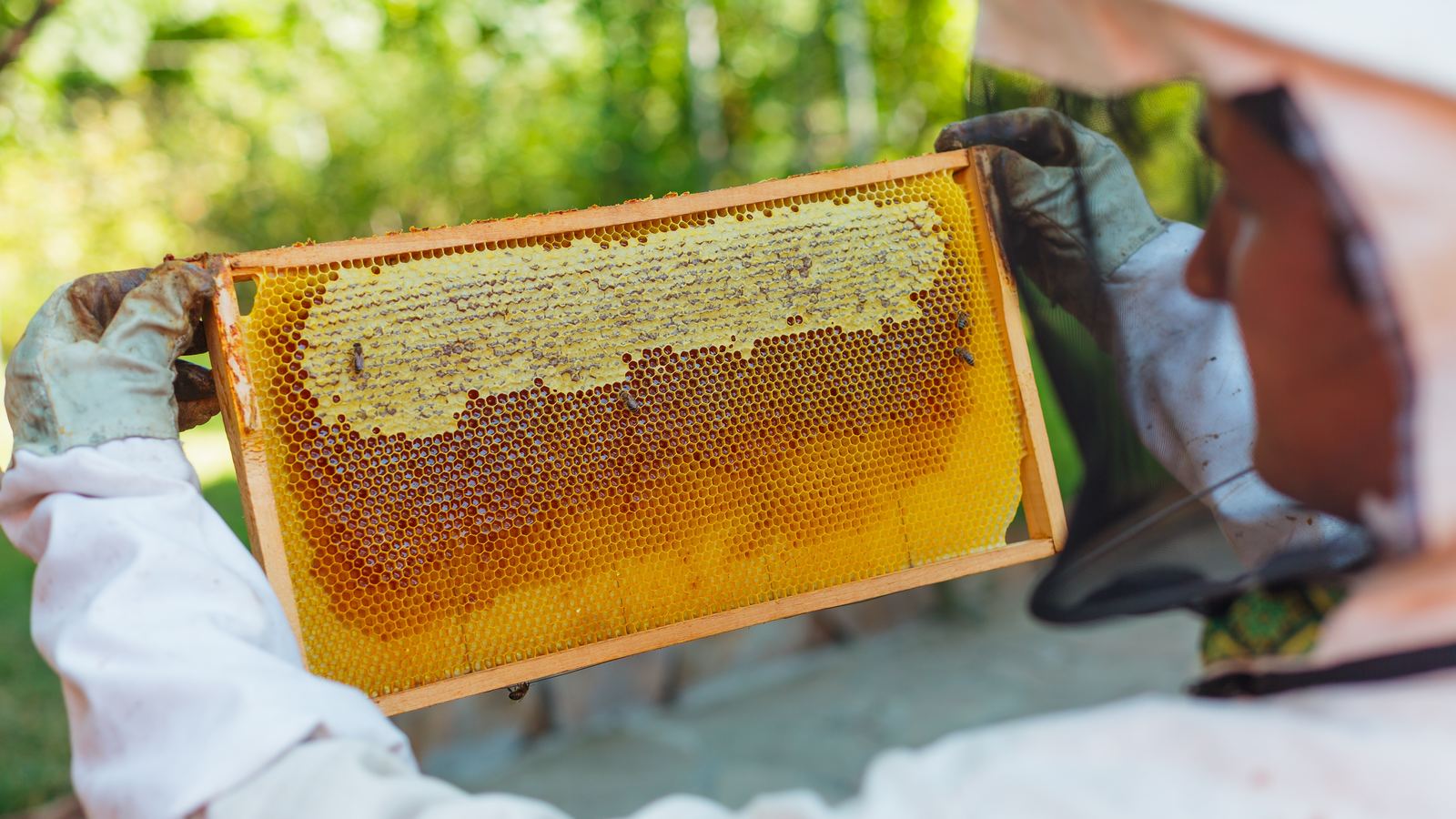
Varroa sits in sealed brood. High strength with a shrinking brood area means: more mites on fewer cells, so a steeper infestation of the remaining brood. That is exactly where the winter bees are raised.
Beekeeping work
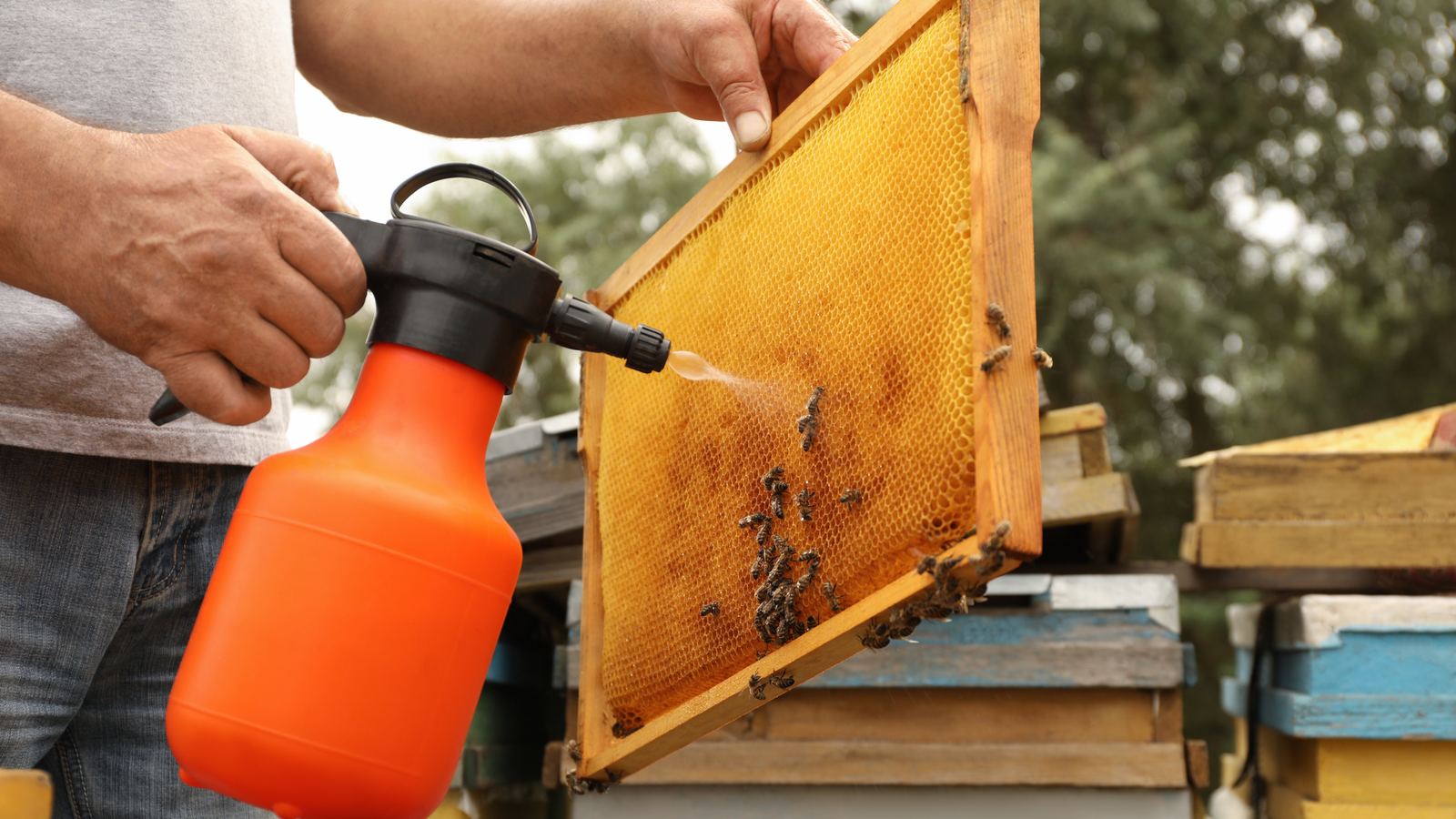
Extract the late crop where it exists (phacelia, sunflower, honeydew). Then take supers off and reduce the brood nest to winter size. Treat to a plan: formic acid in the right temperature window, or other authorised products, plus biotechnical methods.
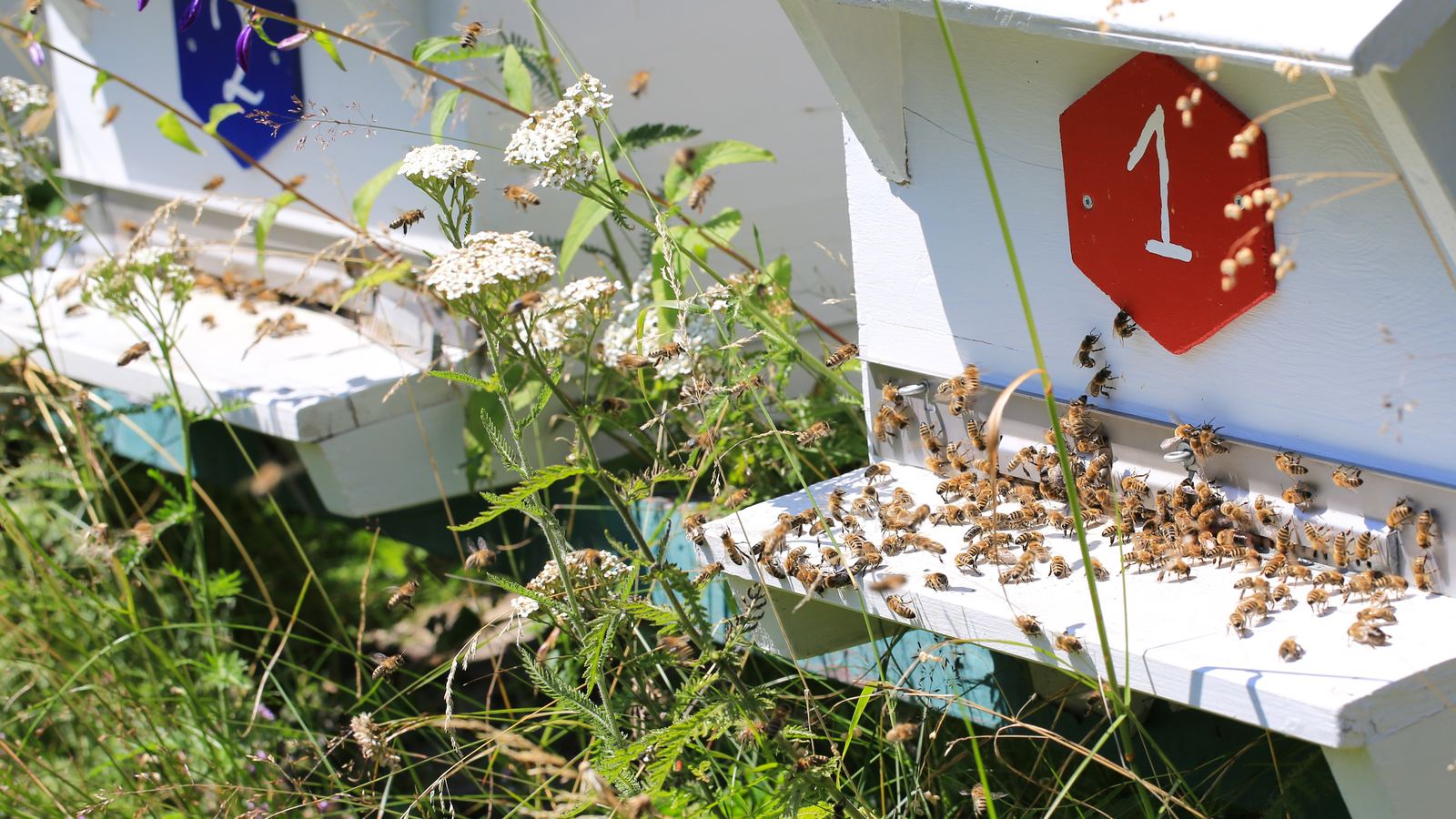
Do not wait until September to start feeding if the colony is already hungry. After harvest it needs feed promptly, or brood collapses further. Prevent robbing: feed late in the day, reduce entrances, no open comb at the apiary.
Forage and pollen
Depending on site: last lime, phacelia as a catch crop, sunflower, in gardens lavender and summer flowers, in woodland honeydew. Many apiaries simply have a gap. Then what counts is the feed the beekeeper replaces — and whether anything in the landscape is still in bloom.
A mixed pollen diet still matters for raising winter bees. A monotonous maize or stubble landscape without flower strips supplies a calorie gap and a protein gap at once.
At the apiary
- Last harvest, then take supers off
- Begin varroa treatment; watch the temperature window
- Feed promptly after extracting
- Reduce entrances; watch for robbing
- Repeat mite checks — do not treat once and forget
Forage this month
Lime (fading) · Phacelia · Sunflower · Honeydew