21 days
From egg to worker: what happens in three weeks inside a cell held at 35 °C.
The queen lays an egg in a cleaned cell. After three days the larva hatches and is fed by nurse bees — first brood food, later pollen and honey.
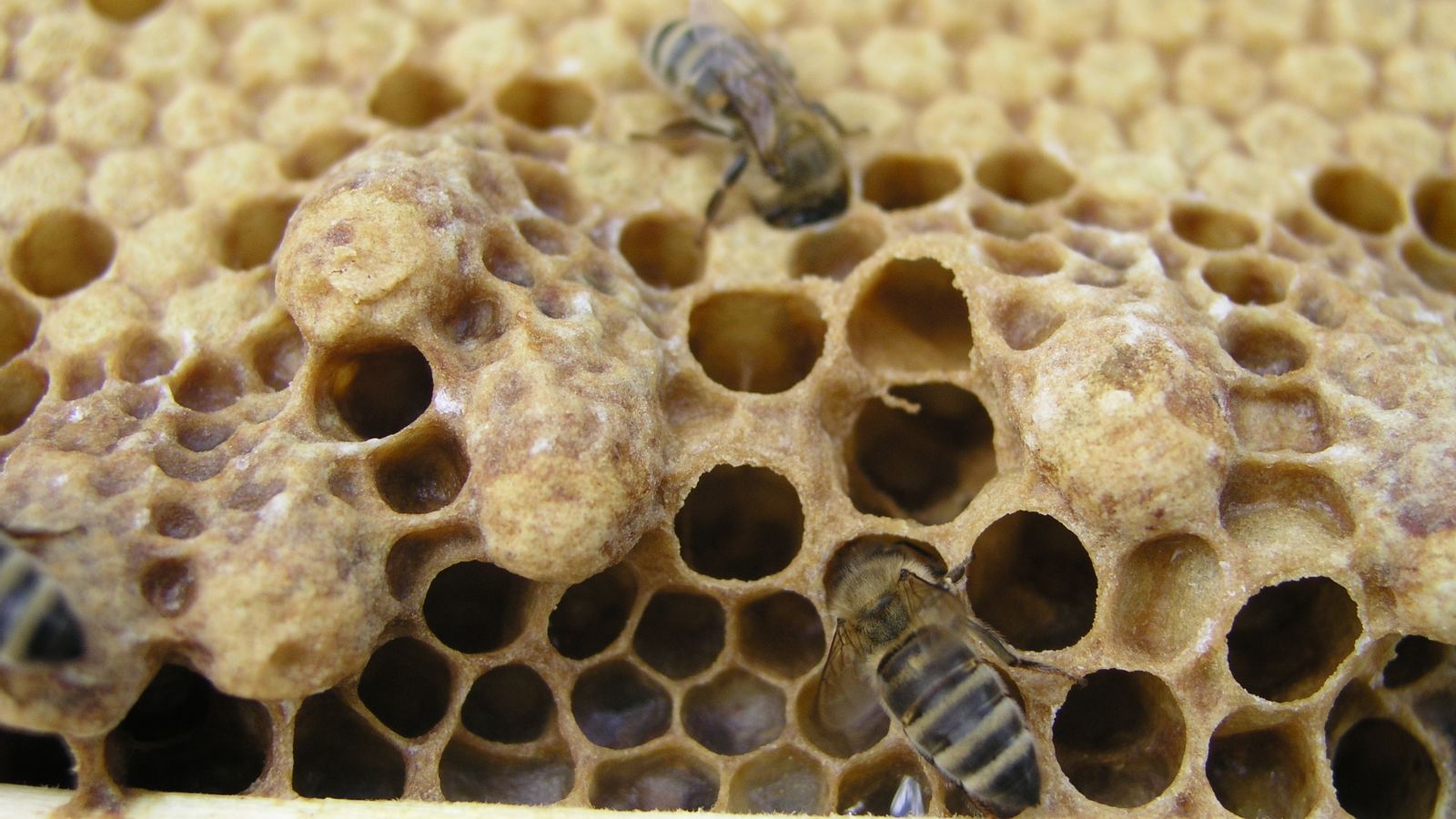
On day nine the workers cap the cell with wax. Inside, the larva spins a cocoon and pupates; within days the larval body becomes a bee with wings, compound eyes and a sting.
The precondition is temperature: the brood nest is held near 35 °C, with less than a degree of variation. Cooler brood produces bees with measurably poorer learning.
Development time to emergence
Days from egg to emergence, guide values at normal brood temperature.Three weeks in a cell, then six weeks of work — in summer.
After emergence a fixed programme follows: cell cleaning, nursing, building, guarding, then foraging. The order tracks gland development, not calendar age alone.
Summer bees live about six weeks, winter bees six to eight months. It is the same bee — with a different physiology.